
Things to Do in Jaipur
Overview
Jaipur, the capital of Rajasthan, stands as one of India’s most captivating destinations, where centuries-old palaces share the skyline with bustling bazaars, and royal heritage blends seamlessly with vibrant street life. Founded in 1727 by Maharaja Sawai Jai Singh II, Jaipur was one of the earliest planned cities in modern India and earned UNESCO World Heritage status in 2019. The nickname “Pink City” comes from 1876, when Maharaja Sawai Ram Singh II had the entire Old City painted a delicate pink hue to welcome Queen Victoria’s husband, Prince Albert a tradition maintained by law to this day.
Whether you have one day or an entire week, this comprehensive guide covers all the essential things to do in Jaipur, from iconic heritage monuments and cultural experiences to hidden gems, local food trails, and Instagram-worthy photography spots like Patrika Gate.
Heritage Monuments in Jaipur
Amber (Amer) Fort
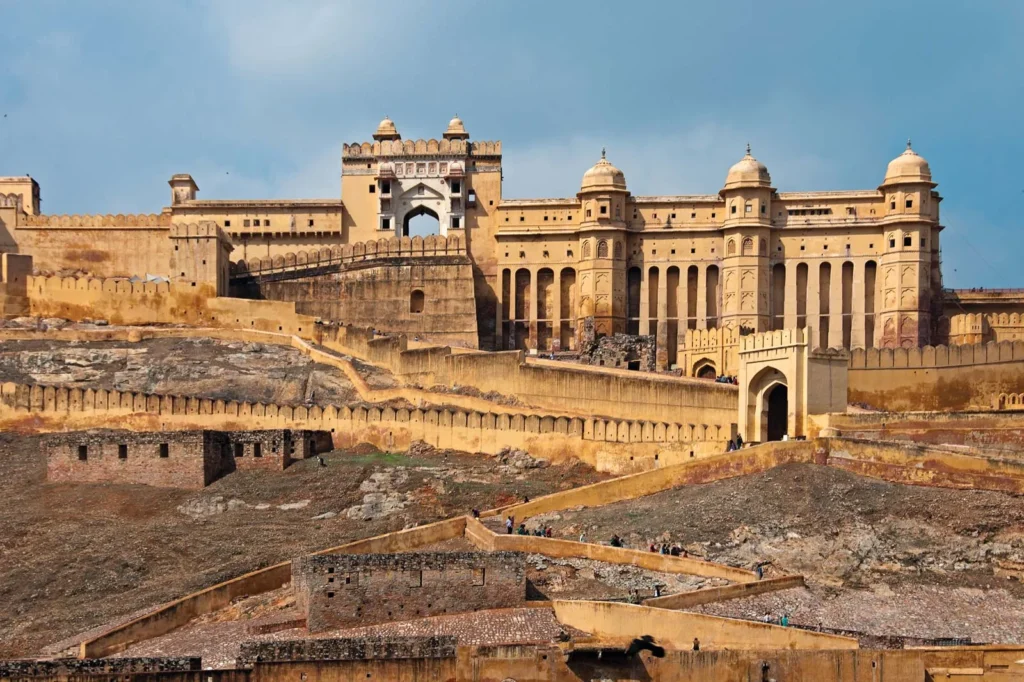
What makes Amber Fort special:
- Sheesh Mahal (Mirror Palace): The most famous attraction within the fort, this hall features thousands of tiny mirrors embedded in the walls and ceiling, creating a dazzling effect when even a single candle is lit.
- Ganesh Pol: An intricately painted gateway featuring stunning frescoes and tile work, serving as the entrance to the private palaces.
- Diwan-e-Aam (Hall of Public Audience): A pillared hall where the king would meet common citizens and hear their grievances.
- Sukh Niwas (Hall of Pleasure): Featuring an ingenious cooling system with water channels that provided natural air conditioning centuries before modern technology.
Practical Information:
- Timings: 9:00 AM to 6:00 PM daily
- Entry Fee:
- Indian Adults: ₹200
- Foreigners: ₹550
- Students: ₹100
- Light and Sound Show: 7:30 PM (English) and 8:00 PM (Hindi) – ₹250 + GST
- Time needed: Allow at least 2-3 hours to explore the fort at an unhurried pace
Travel tip: Arrive by 8:00 AM to beat the crowds and avoid the intense midday heat, especially during summer months. While elephant rides to the fort are offered, many travelers now choose to walk or take a jeep, as concerns about animal welfare have increased.
Amber Fort is the crown jewel of Jaipur’s heritage monuments and an absolute must-visit for anyone exploring the city. Located approximately 11 kilometres from the main city centre, this golden-hued fortress rises majestically over Maota Lake, creating one of Rajasthan’s most breathtaking panoramas. Built by Raja Man Singh I in the late 16th century and later expanded by successive rulers, Amber Fort showcases a stunning blend of Rajput and Mughal architectural styles that has captivated visitors for centuries.
Nahargarh Fort
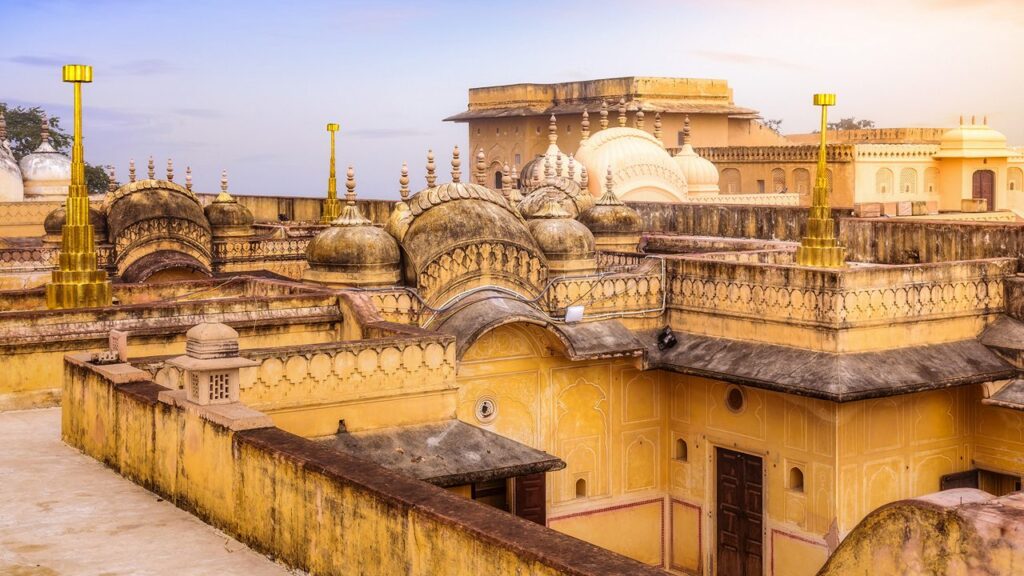
Highlights of Nahargarh Fort:
- Madhavendra Bhawan: A unique palace featuring twelve identical suites arranged in a row, each connected by corridors, built for the queens of Maharaja Sawai Madho Singh II.
- Padao Restaurant: A charming café at the fort offering drinks with stunning city views-your entry ticket often includes a complimentary beverage voucher.
- Wax Museum and Sculpture Park: Recent additions that add contemporary attractions to this historic site.
- Night views: Watching Jaipur’s city lights twinkle below from Nahargarh is one of the most magical things to do in Jaipur after dark.
Practical Information:
- Timings: 9:30 AM to 5:30 PM
- Entry Fee: ₹50 for Indians; ₹200 for foreigners / Extra Ticket for Wax Museum & Sheesh Mahal
- Best time to visit: Late afternoon, arriving by 4:00 PM to explore the fort and then catch the sunset
Adventure option: For the fitness-minded, trekking or cycling up to Nahargarh Fort is one of the most exhilarating things to do in Jaipur, offering stunning views along the way.
Nahargarh Fort offers arguably the most spectacular panoramic views of Jaipur and has become the go-to destination for sunset lovers and evening photographers. Perched on the edge of the Aravalli Hills, this 18th-century fortress was originally named Sudarshangarh but was later renamed Nahargarh, meaning “abode of tigers”.
City Palace
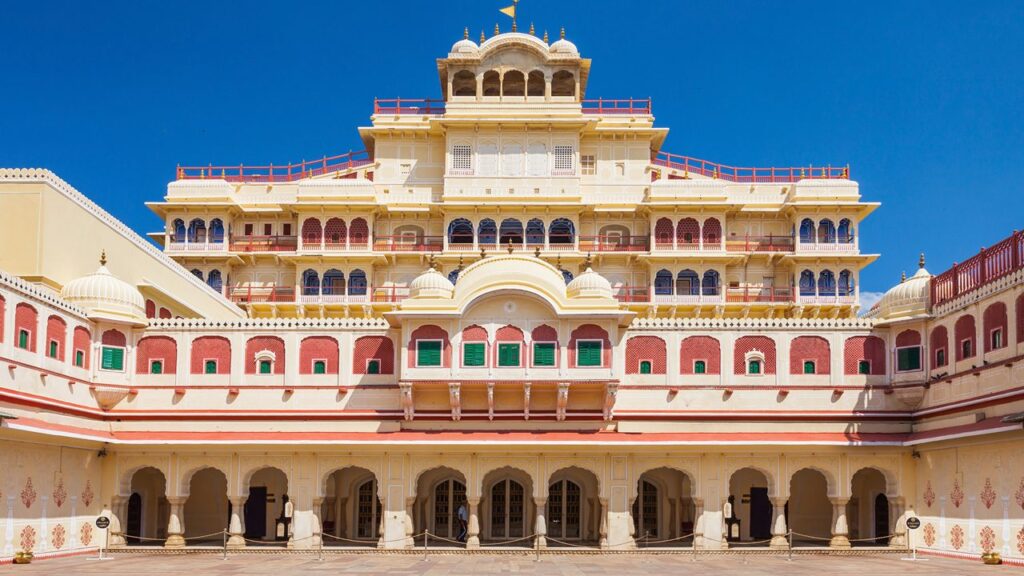
Must-see areas within City Palace:
- Pritam Niwas Chowk: The most photographed spot in the palace, featuring four elaborately decorated doorways representing the four seasons, with the famous peacock gate being particularly stunning.
- Mubarak Mahal (Welcome Palace): Now houses the textile and costume museum displaying royal garments, including a massive outfit belonging to Maharaja Sawai Madho Singh I.
- Diwan-e-Khas (Private Audience Hall): Contains two massive silver urns, the largest silver objects in the world, which were used to carry holy Ganges water to England.
- The Blue Room: For ₹750 extra, visitors can access this Instagram-famous room with its stunning blue interiors.
Practical Information:
- Timings: 9:30 AM to 5:00 PM daily
- Entry Fee: ₹75 for Indian adults; ₹300 for foreigners
Dining tip: The palace houses Baradari Restaurant, serving both Indian and international dishes in a royal setting, perfect for a mid-sightseeing lunch.
The magnificent City Palace stands at the heart of Old Jaipur and remains the official residence of the former royal family, making it a living monument rather than just a museum. Built by Maharaja Sawai Jai Singh II as part of his new capital city, this sprawling complex blends Rajasthani and Mughal architecture in a spectacular fashion.
Hawa Mahal (Palace of Winds)
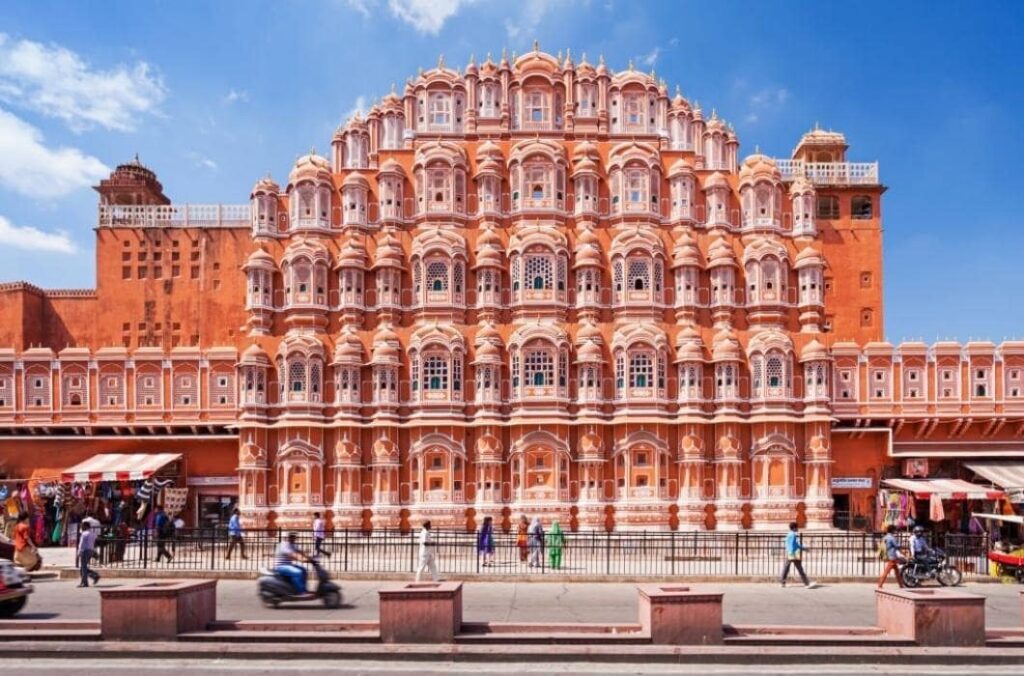
Best ways to experience Hawa Mahal:
- From inside: Pay the ₹50 entrance fee (₹200 for foreigners) to climb the narrow staircases and enjoy views of the bustling Old City below.
- From across the street: Many travelers prefer photographing Hawa Mahal from rooftop cafés opposite, such as Wind View Café or Tattoo Café, which offer unobstructed views along with chai and snacks.
- Best timing: Visit at sunrise for golden light or sunset for dramatic colours, as the pink sandstone facade changes hues throughout the day.
Practical Information:
- Timings: 9:00 AM to 4:30 PM daily
Entry Fee: ₹50 for Indians, ₹200 for foreigners, ₹20 for Indian Students
No visit to Jaipur is complete without seeing Hawa Mahal, the city’s most iconic landmark and one of the most photographed buildings in India. Built in 1799 by Maharaja Sawai Pratap Singh, this five-storey facade features 953 intricately carved jharokha (small windows) that create its distinctive honeycomb appearance.
Understanding Hawa Mahal’s purpose:
The palace was designed as part of the zenana (women’s quarters), allowing royal ladies to observe street festivals and daily life without being seen by the public. The unique design also creates a natural cooling effect through the breeze flowing through the windows-hence the name “Palace of Winds”.
Jantar Mantar Observatory
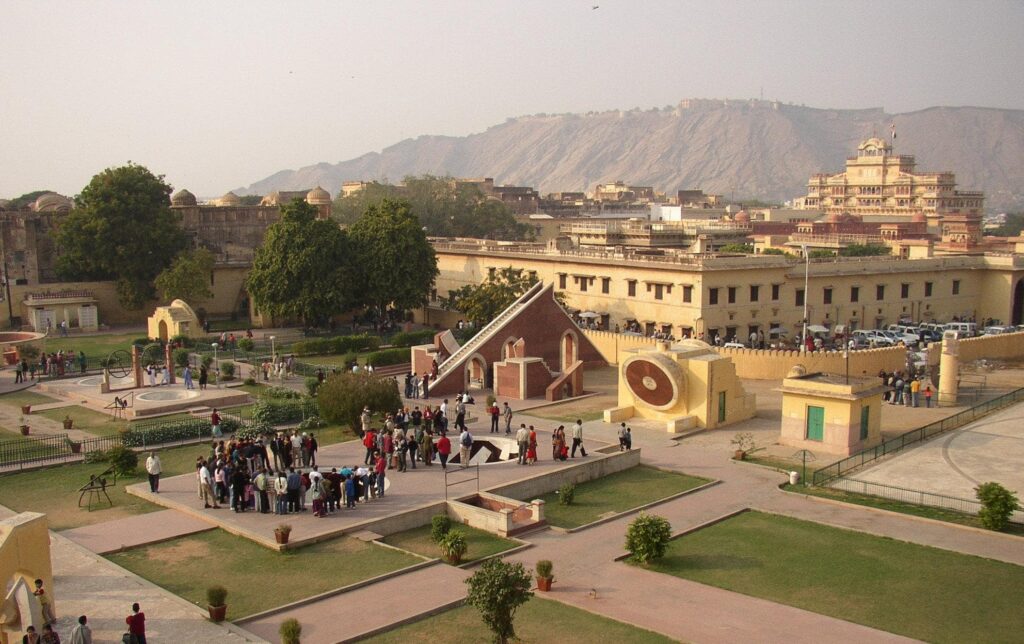
What you can see and learn:
- Samrat Yantra: The giant sundial that can tell time accurately to within two seconds.
- Jai Prakash Yantra: Hemispherical structures used to determine celestial positions.
- Ram Yantra: Cylindrical instruments for measuring the altitudes of celestial bodies.
Practical Information:
- Timings: 9:30 AM to 4:30 PM
- Entry Fee: ₹50 for Indians; ₹200 for foreigners
Recommendation: Hire an official guide or use an audio guide to fully understand how each instrument works-the experience becomes far more meaningful.
Jantar Mantar showcases the scientific brilliance of Maharaja Sawai Jai Singh II, who was not only a warrior king but also a renowned mathematician and astronomer. This UNESCO World Heritage Site contains the world’s largest stone sundial, standing 90 feet tall, along with 18 other astronomical instruments.
Jal Mahal (Water Palace)
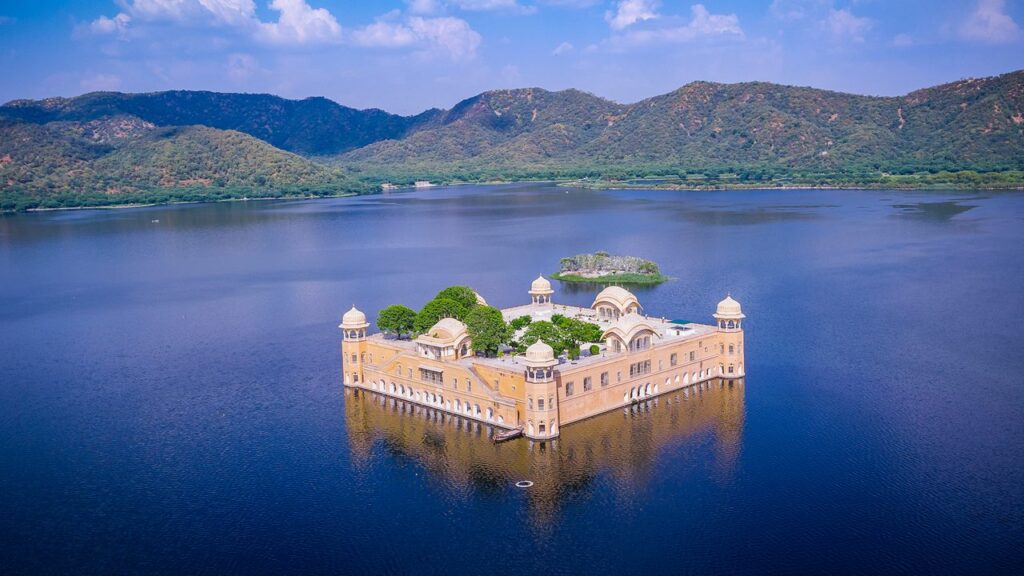
Jal Mahal is one of Jaipur’s most enchanting sights-a red sandstone palace appearing to float in the middle of Man Sagar Lake. Four of its five storeys remain submerged underwater, with only the top floor visible above the surface.
Visiting Jal Mahal:
While entry to the palace itself is restricted, the lakefront promenade offers stunning photo opportunities, especially during sunrise and sunset when the palace reflects beautifully in the water. The area has been developed with walking paths, handicraft stalls, and seating areas for visitors to enjoy the view.
Photography tip: Visit just before sunset to capture the palace glowing in golden light, or come after dark to see it illuminated.
Jaigarh Fort
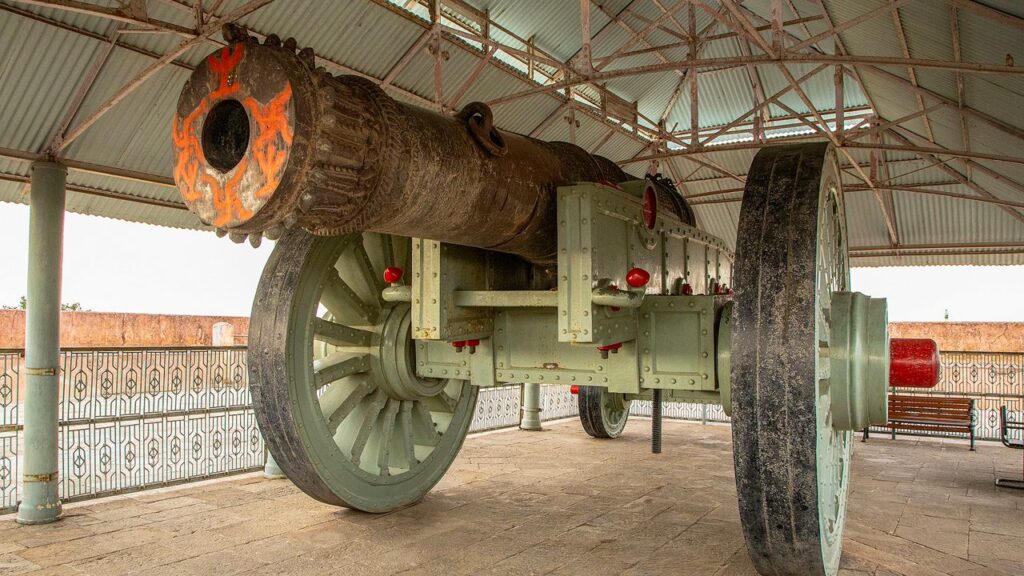
Key attractions at Jaigarh Fort:
- Jaivana Cannon: The fort’s most famous attraction is the world’s largest wheeled cannon, measuring over 20 feet in length and weighing 50 tons. Legend says it was fired only once, and the cannonball landed 35 kilometres away.
- Fort ramparts: Walking along the massive walls provides breathtaking views of the Aravalli hills and Amber Fort below.
- Water storage systems: The fort contains massive underground tanks that could store millions of litres of rainwater, demonstrating sophisticated engineering.
- Armoury and museum: Displaying weapons, armour, and artifacts from the fort’s military history.
Practical Information:
- Time needed: 1-2 hours
Best combined with: Visit Jaigarh after Amber Fort, as they are connected by road and can be covered together
Standing guard above Amber Fort on the Cheel ka Teela (Hill of Eagles), Jaigarh Fort represents one of India’s best-preserved 17th-century military fortifications. Often called the “Victory Fort,” Jaigarh was never conquered in its entire history and remains a testament to Rajput military architecture.
Cultural and Spiritual Experiences
Birla Mandir (Lakshmi Narayan Temple)
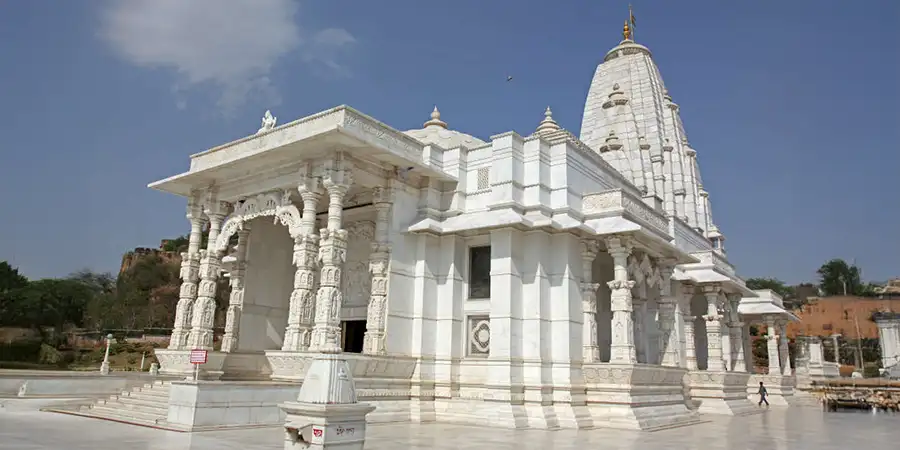
What makes Birla Mandir special:
- Intricate marble carvings depicting Hindu mythology and philosophy
- Stained glass artwork and mixed-media paintings on the walls
- Peaceful gardens surrounding the main temple
- Spectacular illumination after sunset
Practical Information:
- Timings: 8:00 AM to 12:00 PM and 4:00 PM to 8:00 PM
Entry Fee: Free
Birla Mandir is a stunning modern temple constructed entirely from white Makrana marble, the same stone used in the Taj Mahal. Set against the backdrop of Moti Dungri hill and its fort, the temple presents a striking visual contrast and looks particularly beautiful when illuminated at night.
Govind Dev Ji Temple
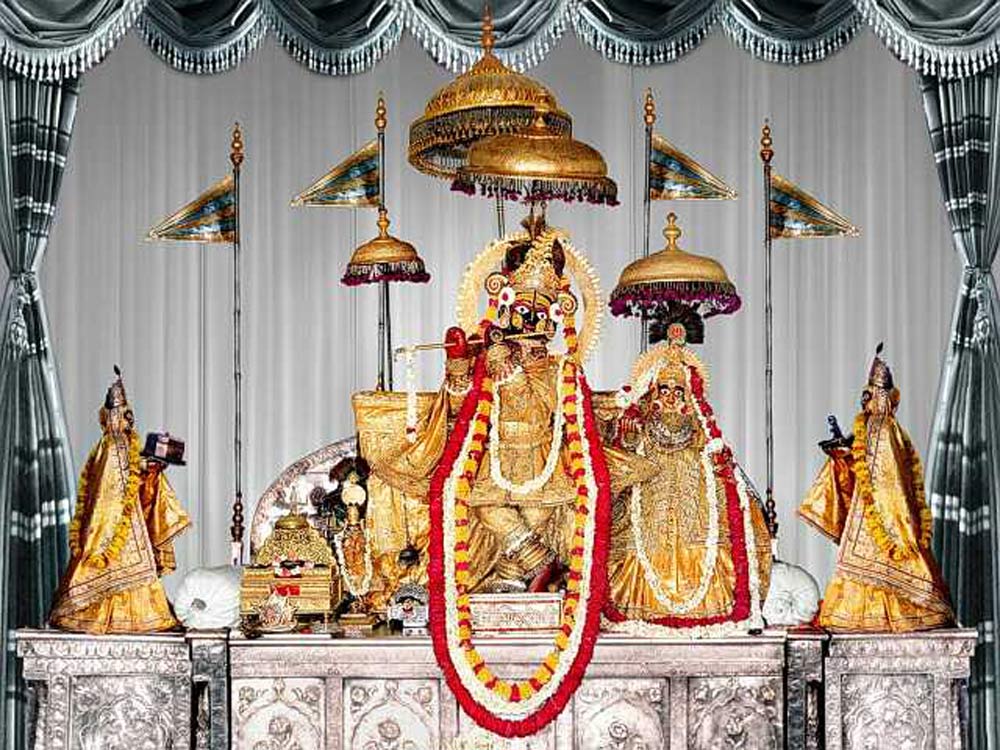
Experiencing the temple:
- Attend the morning or evening aarti for the full spiritual experience
- Arrive 15-20 minutes early to secure a comfortable standing spot
- Dress modestly and remove shoes before entering
Located within the City Palace complex, Govind Dev Ji Temple is one of Jaipur’s most important religious sites, dedicated to Lord Krishna. The temple draws thousands of devotees daily for its elaborate aarti ceremonies, which feature devotional music, bells, and a deeply spiritual atmosphere.
Galtaji (Monkey Temple)
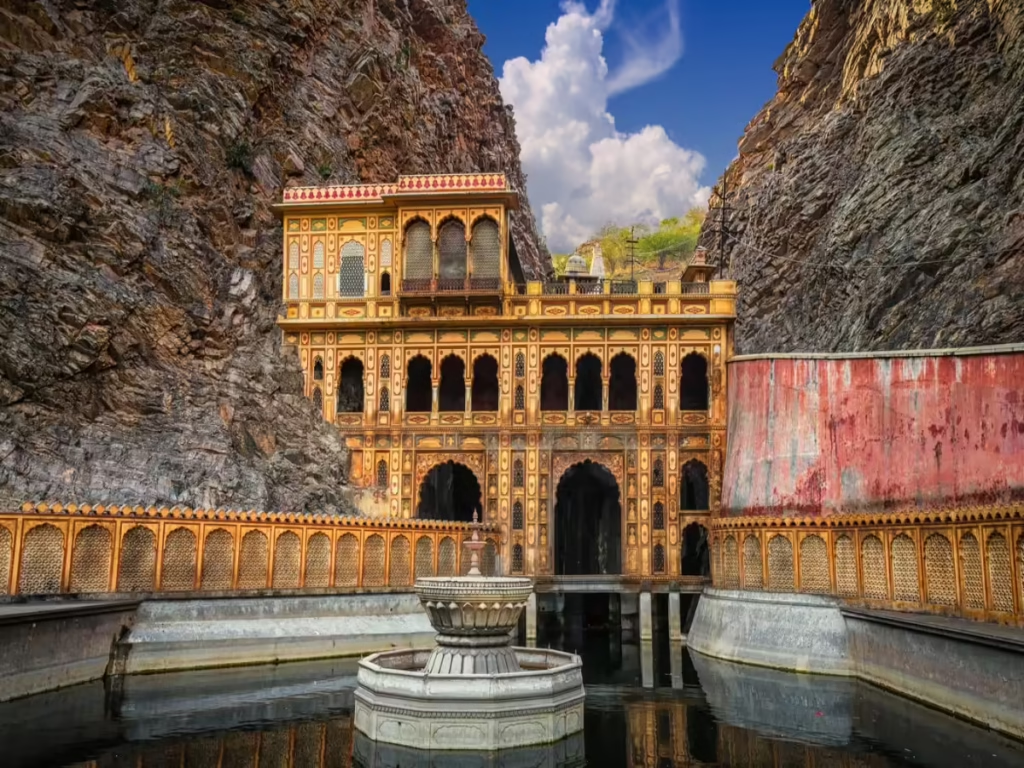
Experiencing Galtaji:
- Sunrise hike: One of the most rewarding things to do in Jaipur is hiking up to Galtaji at sunrise, watching the sun paint the hills golden as you climb.
- Meeting the monkeys: The temple is home to hundreds of langurs and macaques-keep personal belongings secure and avoid feeding them directly.
- Exploring the haveli: The adjacent haveli features beautiful murals and carved archways perfect for photography.
Practical Information:
- Timings: 5:00 AM to 9:00 PM
- Entry Fee: Free
Tip: Consider hiring a local “Bandar walla” (monkey guide) who can help you safely interact with and photograph the monkeys.
Galtaji, commonly known as the Monkey Temple, is an ancient pilgrimage site nestled in a narrow mountain pass of the Aravalli Hills. The complex features several temples and seven sacred kunds (water tanks) fed by natural mountain springs.
Chokhi Dhani Cultural Village
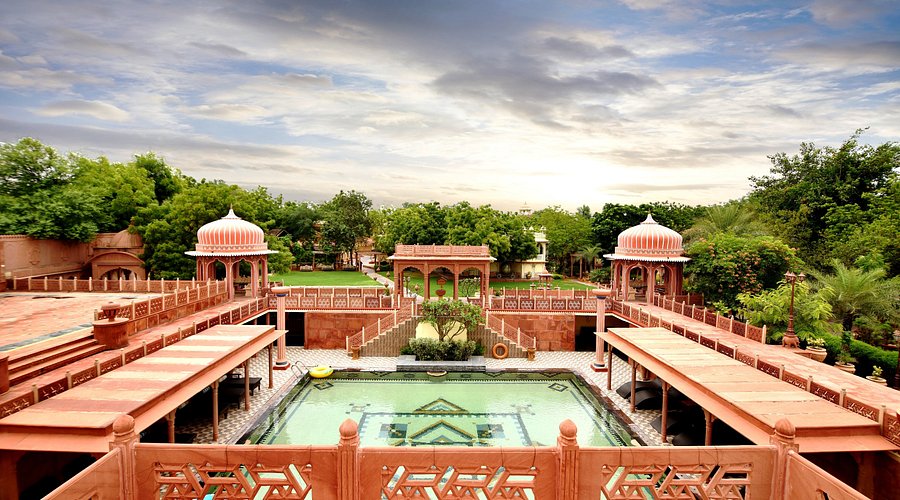
What to experience at Chokhi Dhani:
- Traditional performances: Kalbeliya (snake charmer dance), Ghoomar, Chari (pot dance), puppet shows, and folk music
- Activities: Camel rides, palmistry readings, henna application, traditional games, and dress-up in Rajasthani attire
- Authentic Rajasthani thali dinner: Served on traditional leaf plates (pattals) with unlimited refills-expect servers to keep loading food onto your plate regardless of your protests!
Practical Information:
- Timings: 5:00 PM to 11:00 PM
Cost: Approximately ₹1,600 for two
Chokhi Dhani offers a complete immersion into traditional Rajasthani village life, culture, and cuisine all in one evening. Located about 20 kilometres from central Jaipur on Tonk Road, this ethnic village-themed resort has become one of the most popular things to do in Jaipur for families and groups.
Shopping in Jaipur's Historic Bazaars
Shopping is one of the quintessential things to do in Jaipur, and the Old City bazaars offer an authentic, immersive experience that no mall can match. Each market specializes in specific crafts, so knowing what to buy where makes all the difference.
Johari Bazaar – Jewellery Paradise
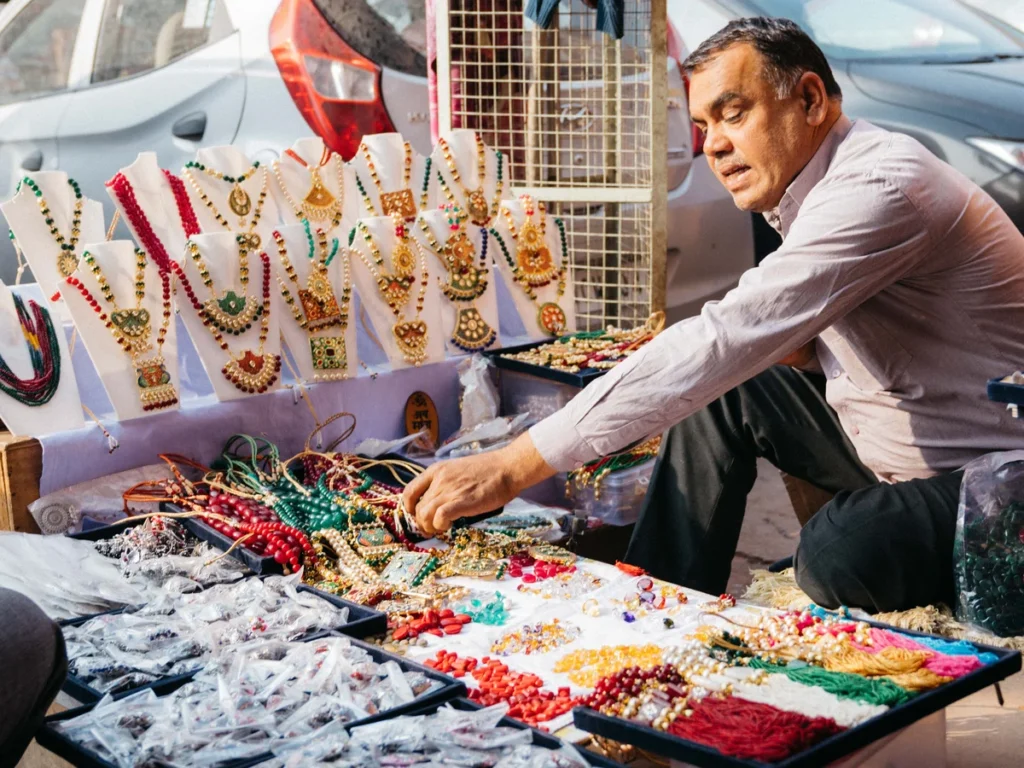
What to buy:
- Silver jewellery with semi-precious stones
- Kundan and polki jewellery
- Meenakari (enamel) pieces
- Loose gemstones (emeralds, rubies, sapphires)
Shopping tip: Look for certified stores and always ask about hallmarking for gold purchases. Consider booking a guided shopping tour with operators like Virasat Experiences for expert guidance.
Johari Bazaar is Jaipur’s legendary jewellery district, famous worldwide for precious and semi-precious gemstones, kundan work, meenakari enamelwork, and gold ornaments. Jaipur is one of the world’s largest gem-cutting centres, making this the perfect place to purchase quality jewellery.
Bapu Bazaar – Textiles and Souvenirs
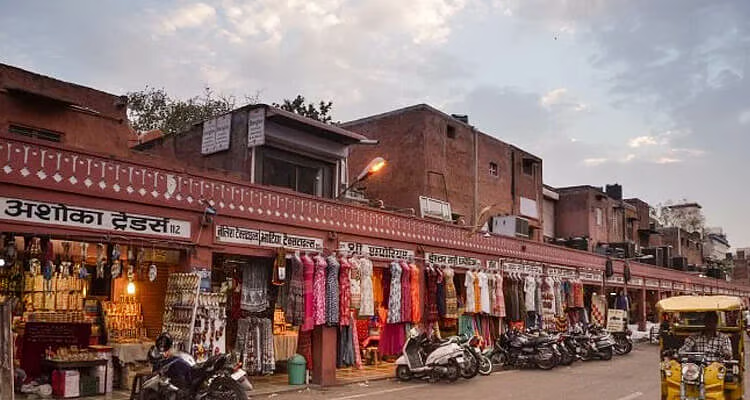
What to buy:
- Silver jewellery with semi-precious stones
- Kundan and polki jewellery
- Meenakari (enamel) pieces
- Loose gemstones (emeralds, rubies, sapphires)
Shopping tip: Look for certified stores and always ask about hallmarking for gold purchases. Consider booking a guided shopping tour with operators like Virasat Experiences for expert guidance.
Bapu Bazaar is the go-to market for textiles, traditional footwear, and affordable souvenirs. The colourful chaos of this market makes it one of the most photogenic shopping destinations in Jaipur.
Tripolia Bazaar – Lac Bangles
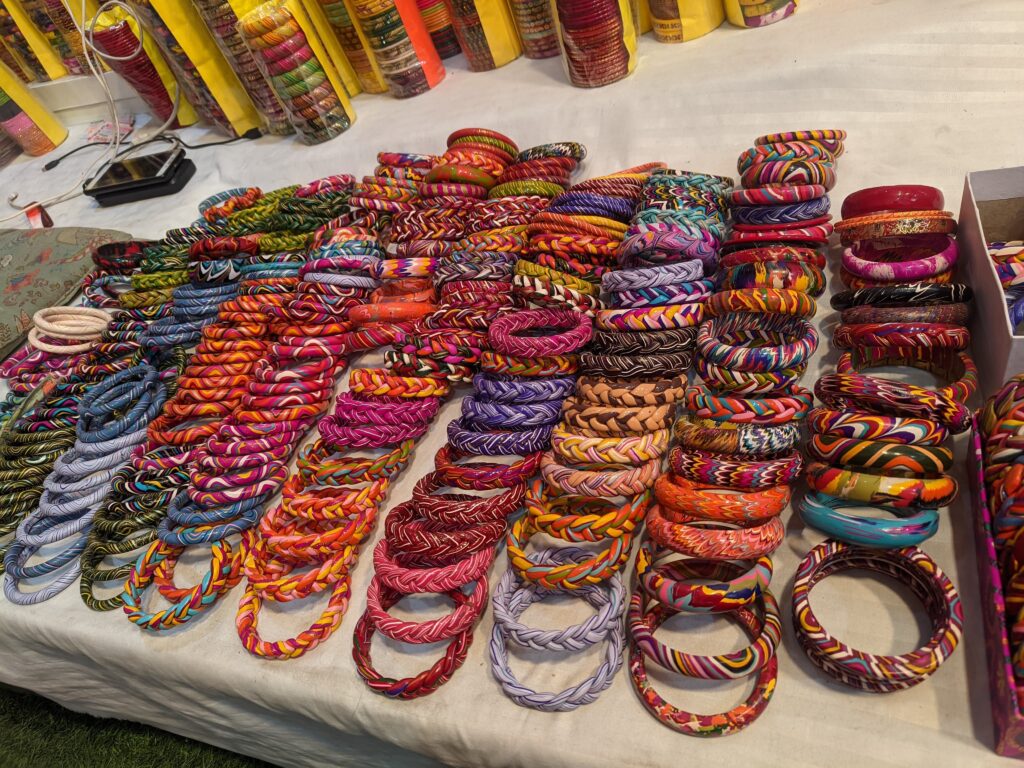
What to buy:
- Lac bangles in every colour imaginable
- Blue pottery items
- Brassware and sculptures
- Traditional accessories
Tripolia Bazaar connects Chand Pol to Sanganeri Gate and is famous for lac bangles, brassware, pottery, and traditional ornaments. Watching artisans shape and decorate colourful lac bangles is one of the unique things to do in Jaipur.
MI Road – Modern Shopping
Recommended stops:
- Rajasthali (government emporium) for fixed-price handicrafts
- Blue pottery showrooms
- Anokhi for contemporary block-print fashion
- LMB (Laxmi Misthan Bhandar) for sweets and snacks
MI Road (Mirza Ismail Road) offers a more relaxed shopping experience with fixed-price government emporiums, branded stores, and popular restaurants. Perfect for those who prefer avoiding the bargaining process.
Food Experiences in Jaipur
Must-Try Street Food
Essential street food stops:
- Rawat Mishthan Bhandar (Sindhi Camp): Famous for pyaaz kachori-crispy, deep-fried flatbread stuffed with spiced onions and potatoes
- Lassiwala (MI Road): Look for “Kishan Lal Govind Narain Agarwal” to find the original among imitators-their thick, creamy lassi is unmissable
- Sardarji Hing Wala: Known for special dal kachori made with hing (asafoetida) imported from Afghanistan for over 50 years
- LMB: Famous for ghewar (disc-shaped dessert) and dal baati churma
Street chaat stalls: Try mirchi vada, bun samosa, and falooda throughout the Old City
Jaipur’s street food scene is legendary, offering flavours found nowhere else in India. A street food trail is one of the most delicious things to do in Jaipur.
Traditional Rajasthani Thali
Typical thali dishes:
- Dal baati churma: Spiced lentils with crispy dough balls and sweetened crushed wheat
- Gatte ki sabzi: Chickpea flour dumplings in yogurt gravy
- Ker sangri: Tangy desert berries and beans
- Laal maas: Fiery red mutton curry (non-vegetarian)
Best restaurants for thalis:
- Suvarna Mahal at Rambagh Palace (luxury)
- 1135 AD at Amer Palace
- Spice Court (mid-range)
- Natraj Restaurant in Old City (budget)
Experiencing an authentic Rajasthani thali is among the most flavourful things to do in Jaipur. These elaborate platters showcase the full spectrum of Rajasthani cuisine.
Rooftop Cafés and Fine Dining
Top recommendations:
- Bar Palladio: Rated one of India’s best bars by CNN Traveler, featuring stunning electric-blue interiors and Italian-inspired menu
- Café Palladio: The daytime version with fairy-tale-like décor and excellent coffee
- Wind View Café: Perfect Hawa Mahal views with your chai
- Once Upon A Bagh: Elegant dining near Amer Fort
- Jaipur Modern Kitchen: Contemporary cuisine in C-Scheme
Magnolia Café: Set inside a mini forest, perfect for brunch
Jaipur has developed a sophisticated café and bar scene that rivals any metropolitan city.
Unique and Instagrammable Activities
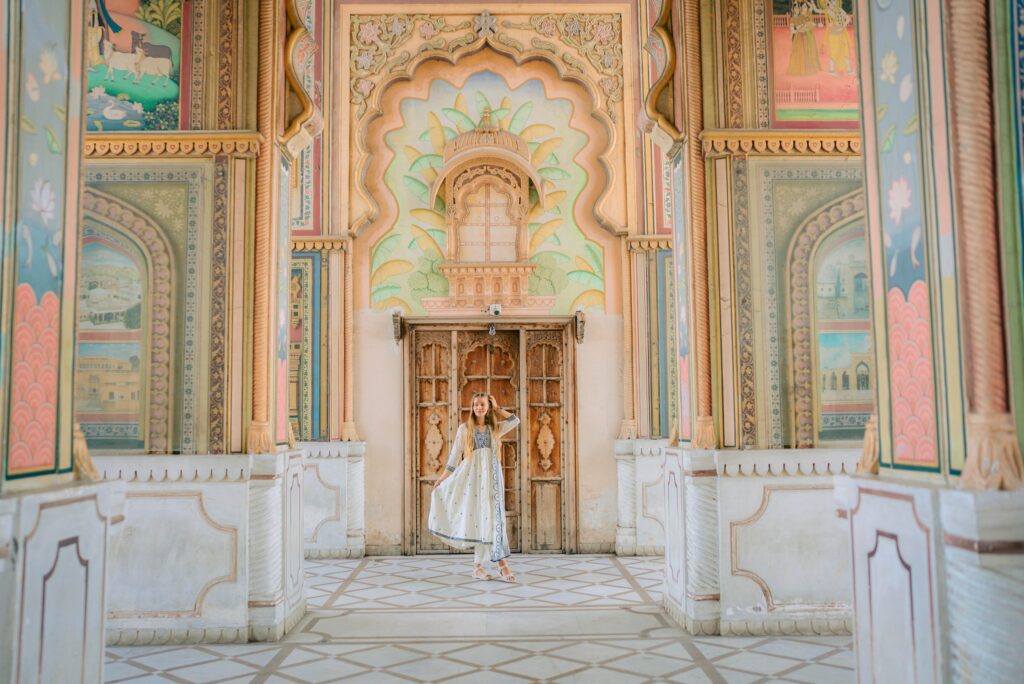
Patrika Gate – Jaipur's Most Instagrammable Spot
Photography tips for Patrika Gate:
- Visit early morning (6-8 AM) on weekdays to avoid crowds and capture soft golden light
- Experiment with symmetrical compositions under the painted archways
- Explore all nine different themed sections representing various regions of Rajasthan
- Combine your visit with a stroll through Jawahar Circle Garden’s walking paths, fountains, and musical fountain shows
Why it matters for patrikagate.org visitors:
As a signature experience for patrikagate.org, Patrika Gate offers the perfect blend of traditional Rajasthani art, contemporary design, and Instagram-worthy aesthetics. The gate serves as a gateway to understanding Rajasthan’s diverse cultural heritage, with each section showcasing the architectural and artistic traditions of different regions.
Patrika Gate at Jawahar Circle Garden has become one of the most photographed locations in Jaipur, despite being only about 8 years old. Built by the founders of Rajasthan Patrika newspaper, this magnificent structure features multi-coloured archways with intricate paintings representing all 36 districts of Rajasthan.
Panna Meena Ka Kund Stepwell
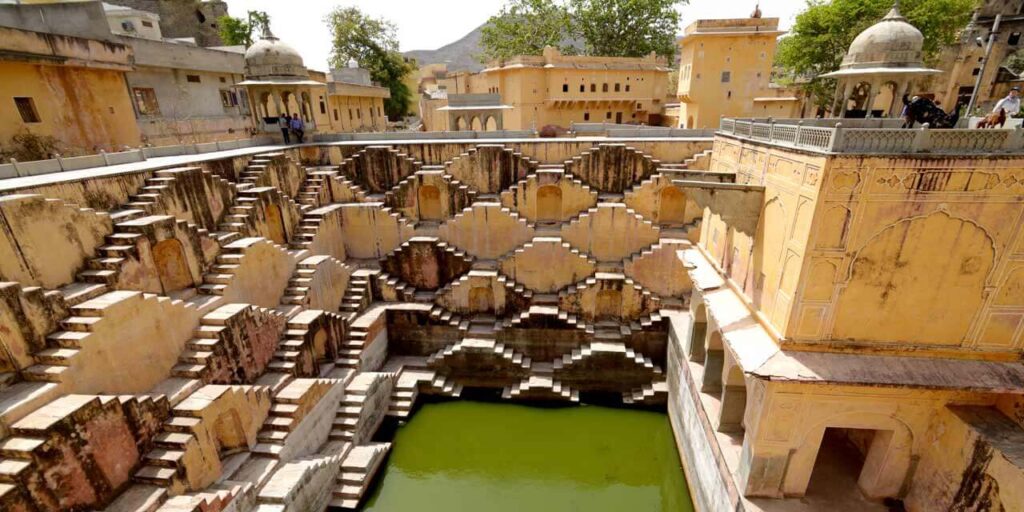
Visiting tips:
- Located just outside Amber Fort’s exit
- Best photographed in early morning or late afternoon light
- Less crowded than major attractions
- No entry fee
This hidden gem near Amber Fort is one of the most photogenic stepwells in Rajasthan. The crisscrossing symmetrical stairs leading down to an emerald pool create stunning geometric patterns perfect for photography.
Hot Air Balloon Ride
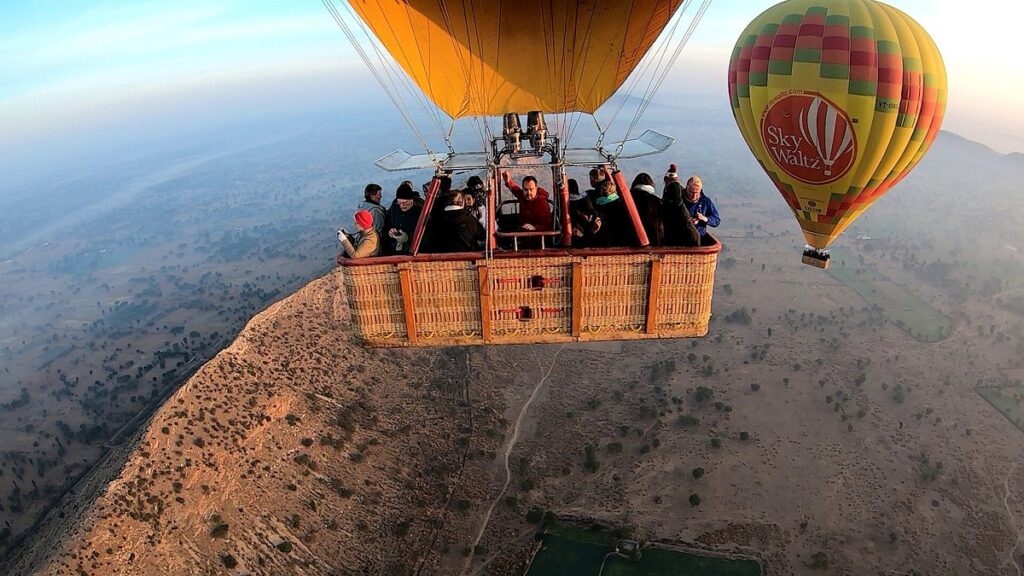
What to expect:
- Routes: Flights over Amber Fort and surrounding villages, or over the Samode Palace area
- Season: September to April
- Timing: Early morning (6:00-9:00 AM) for calm winds and sunrise views
- Cost: ₹8,000 to ₹12,000 depending on operator and package
Recommended operator: SkyWaltz is an authorized operator with excellent safety records.
For the ultimate bird’s-eye view of Jaipur’s magnificent forts and landscapes, a hot air balloon ride is one of the most unforgettable things to do in Jaipur.
Elephantastic Elephant Sanctuary
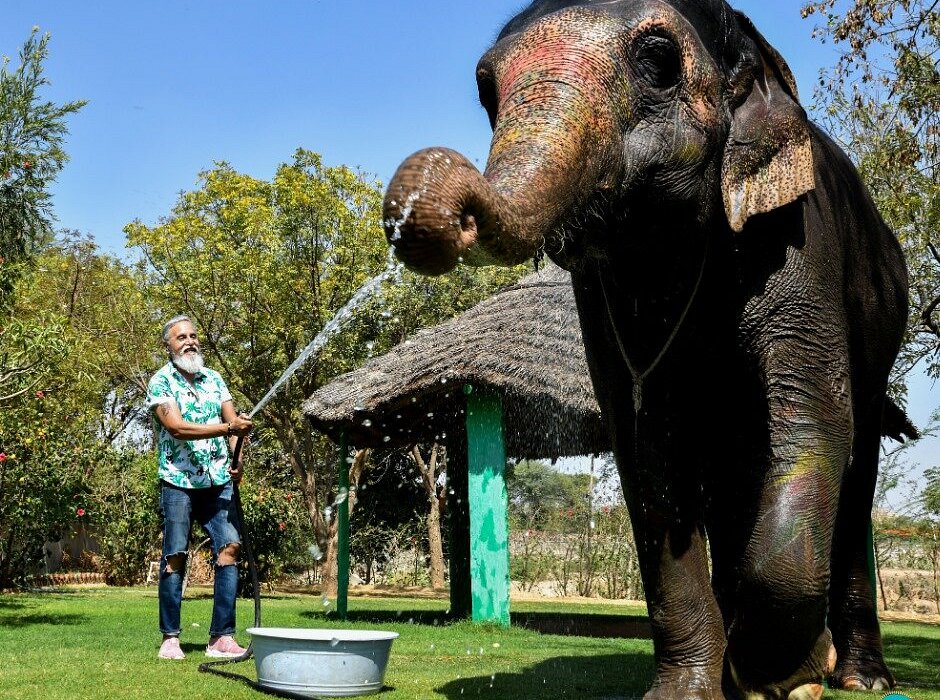
Experience includes:
- Meeting and feeding elephants with sugar cane
- Painting elephants with natural, safe paints
- Bathing elephants (weather permitting)
- Home-cooked meal with the family (depending on package)
Why choose Elephantastic:
The sanctuary demonstrates that tourism can support animal welfare rather than exploitation-a testament to responsible travel.
For an ethical elephant experience, Elephantastic offers a refreshing alternative to the controversial elephant rides at Amber Fort. Founded by Rahul, a former mahout who witnessed poor treatment of elephants, this sanctuary prioritizes animal welfare.
Raj Mandir Cinema
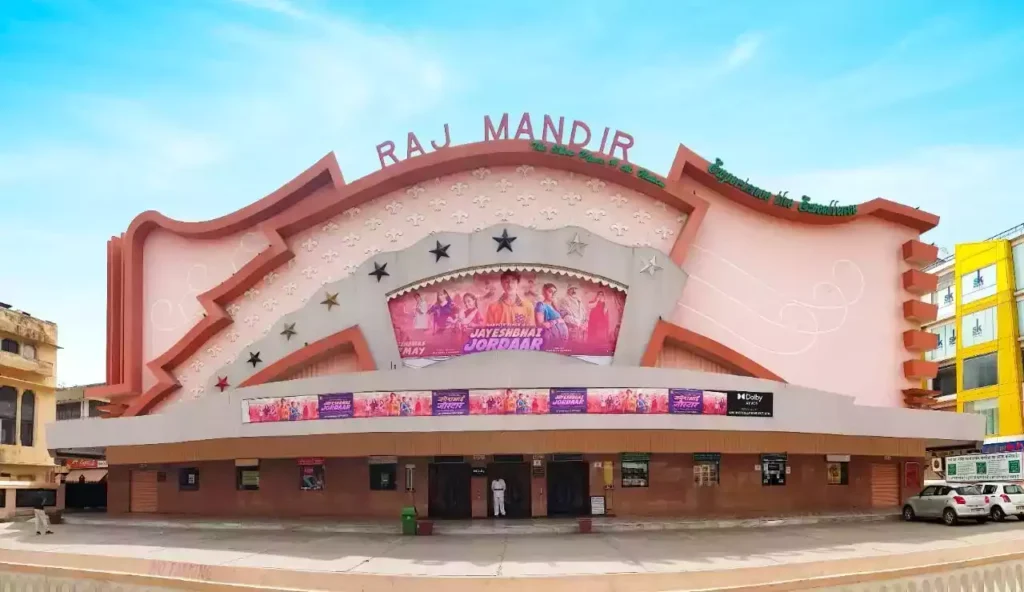
What to expect:
- Sold-out screenings with enthusiastic local audiences
- Affordable tickets
- Films usually without English subtitles, but the experience transcends language
Opened in 1976, Raj Mandir is one of India’s most famous single-screen cinemas, with its meringue-shaped art deco architecture and pink interiors. Catching a Bollywood film here is one of the most uniquely Indian things to do in Jaipur.
Museums and Galleries
Albert Hall Museum
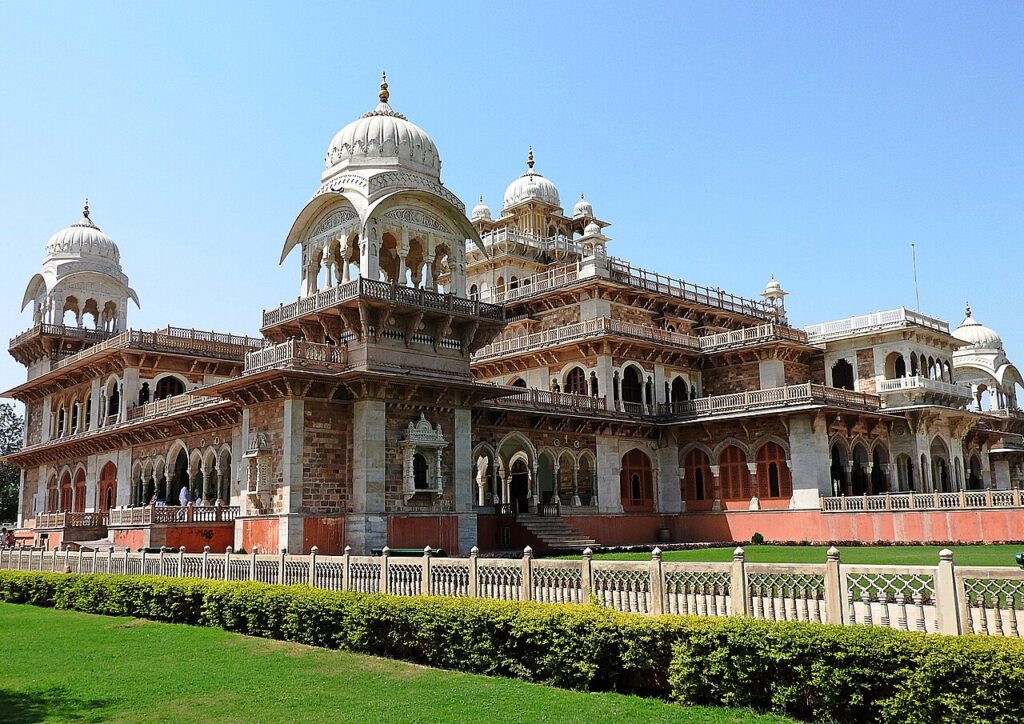
Highlights:
- Egyptian mummy in sarcophagus (star attraction)
- Miniature paintings and sculptures
- Persian carpets and decorative arts
- Evening illumination of the building exterior
Practical Information:
- Timings: 9:00 AM to 5:00 PM and 7:00 PM to 10:00 PM
- Entry Fee: ₹40 for Indians; ₹300 for foreigners
Nearby: Masala Chowk food court for snacks after your visit
The oldest museum in Rajasthan, Albert Hall Museum is housed in a magnificent Indo-Saracenic building and contains treasures ranging from Egyptian mummies to Persian carpets.
Anokhi Museum of Hand Printing
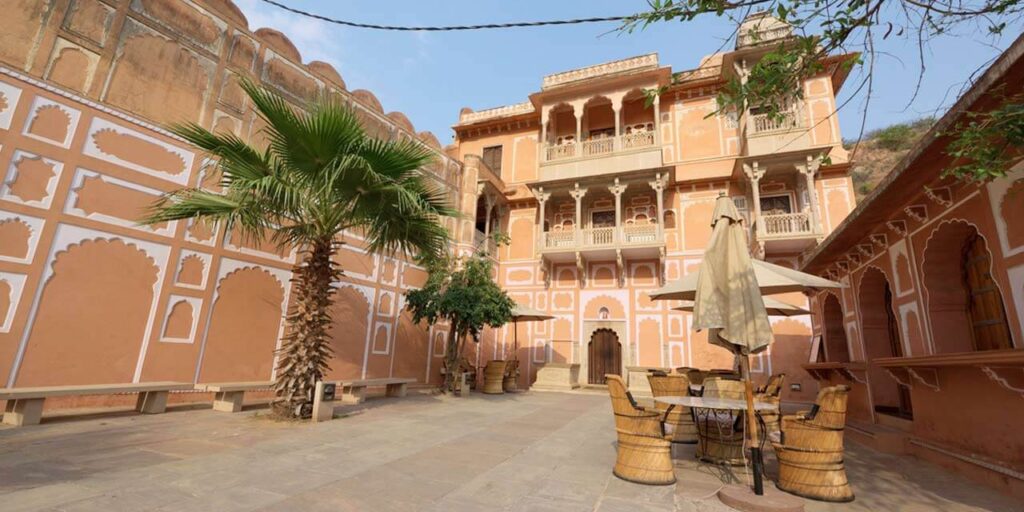
What to experience:
- Exhibitions on block printing history and techniques
- Live demonstrations by block carvers and printers
- Hands-on workshops to try printing yourself
- Quality gift shop
Practical Information:
- Closed on Mondays
- Demonstrations run throughout the day with lunch break
Located in Amber village, this museum offers fascinating insights into Rajasthan’s textile traditions and the art of hand block printing.
Amrapali Museum
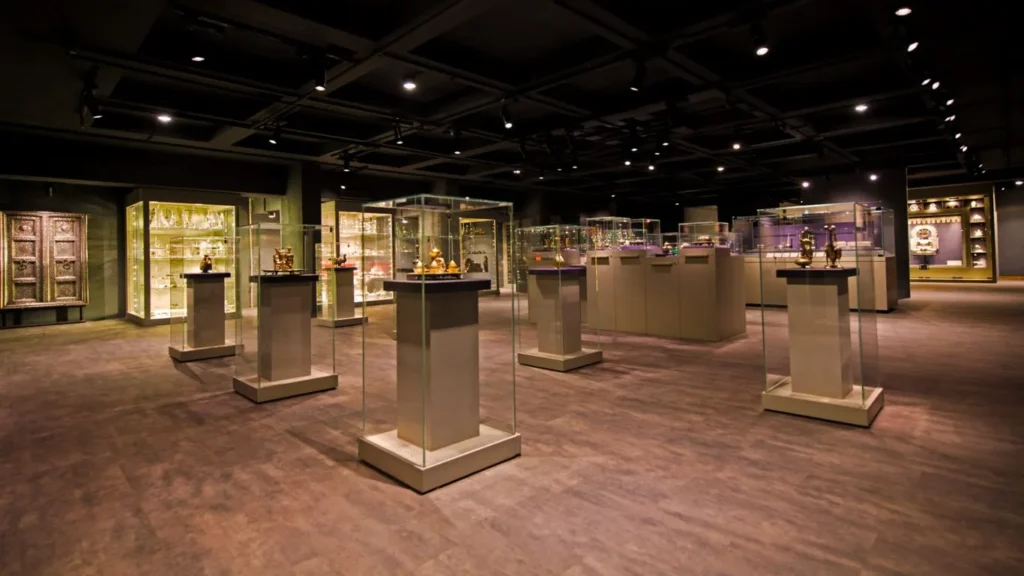
Collection highlights:
- 19th-century heirlooms
- Contemporary Amrapali designs
- Visual storage cases with additional treasures viewable on request
Jewellery enthusiasts will find the Amrapali Museum irresistible, housing over 4,000 pieces of antique and contemporary Indian jewellery.
Suggested Jaipur Itineraries
1-Day Jaipur Highlights
- Early Morning: Start at Amber Fort by 8:00 AM, explore for 2-3 hours
- Mid-Morning: Quick stop at Panna Meena Ka Kund stepwell
- Lunch: Garh Rooftop Café near Amber or return to Old City
- Afternoon: City Palace and Jantar Mantar
- Late Afternoon: Hawa Mahal photos and nearby bazaar shopping
- Evening: Rooftop café dinner with Hawa Mahal views or Patrika Gate for sunset photos
2-3 Days in Jaipur
Day 1:
- Amber Fort, Jaigarh Fort, Panna Meena Ka Kund
- Jal Mahal stop en route back
- Sunset at Nahargarh Fort and Padao Café
Day 2:
- City Palace and Hawa Mahal (morning)
- Jantar Mantar
- Old City bazaar shopping and street food trail
- Evening: Bar Palladio or Chokhi Dhani
Day 3:
- Sunrise at Galtaji Monkey Temple
- Albert Hall Museum
- Birla Mandir
- Golden hour at Patrika Gate
4-5 Days in Jaipur
Additional activities for extended stays:
- Anokhi Museum of Hand Printing and block printing workshop
- Jhalana Leopard Safari (India’s first leopard reserve, just 11 km from city centre)
- Day trip to Chand Baori stepwell at Abhaneri
- Day trip to Pushkar (3 hours)
- Jawahar Kala Kendra for art exhibitions and plays
- Amrapali Museum and Museum of Meenakari Heritage
Practical Travel Tips
Best Time to Visit
The ideal time for exploring things to do in Jaipur is October to March, when temperatures are pleasant for outdoor sightseeing. Summer months (April-June) can reach 45°C, making fort visits uncomfortable, while monsoon (July-September) brings heavy rains.
Getting Around Jaipur
- Tuk-Tuk/Auto-rickshaw: ₹500 for full day (8 hours)
- Taxi: ₹1,600 for full day
- Uber: Works well in Jaipur and often cheaper than negotiating with auto drivers
- Walking: Old City bazaars are best explored on foot
Money Matters
- Cash is king in bazaars and smaller establishments
- Break larger notes (₹2,000) into smaller denominations as soon as possible
- Bargaining expected in markets-start at 40-50% of quoted price
Dress Code and Etiquette
- Modest clothing recommended, especially for temple visits
- Carry a light scarf for covering shoulders when needed
- Remove shoes before entering temples
- Ask permission before photographing people
Composite Ticket
Consider purchasing the composite tourist ticket (around ₹1,000) which includes entry to City Palace, Jantar Mantar, Albert Hall Museum, Nahargarh Fort, Jaigarh Fort, and other sites-excellent value if visiting multiple attractions.
Frequently Asked Questions
1. What are the must-visit places in Jaipur for first-time visitors?
For a first trip, focus on Amber Fort, Jaigarh Fort, Nahargarh Fort, City Palace, Hawa Mahal, Jantar Mantar, Jal Mahal, and the iconic Patrika Gate. These cover Jaipur’s royal history, views, astronomy, and photography‑friendly spots.
2. How many days are enough to explore Jaipur?
Plan at least 2–3 days to comfortably cover the main things to do in Jaipur, including forts, palaces, bazaars, and Patrika Gate. If you also want day trips, workshops, and relaxed café time, 4–5 days is ideal.
3. What is the best time of year to visit Jaipur?
The best time to visit Jaipur is from October to March, when the weather is cooler and sightseeing is more comfortable. April to June can be extremely hot, while July to September brings humidity and monsoon showers.
4. What are some unique things to do in Jaipur beyond forts and palaces?
Beyond the classics, try a hot air balloon ride, street‑food walks, block‑printing workshops, an evening at Chokhi Dhani, stepwells like Panna Meena ka Kund, and sunset or night views from Nahargarh Fort. Patrika Gate and Jawahar Circle Garden are also top picks for colourful photography.
5. Is Patrika Gate worth visiting and what can I do there?
Beyond the classics, try a hot air balloon ride, street‑food walks, block‑printing workshops, an evening at Chokhi Dhani, stepwells like Panna Meena ka Kund, and sunset or night views from Nahargarh Fort. Patrika Gate and Jawahar Circle Garden are also top picks for colourful photography.
6. What are the best places for shopping in Jaipur?
For jewellery, head to Johari Bazaar; for textiles, juttis, and souvenirs, go to Bapu Bazaar; for lac bangles, visit Tripolia Bazaar; and for fixed‑price handicrafts, explore MI Road emporiums. These markets together cover gemstones, fabrics, pottery, and everyday gifts.
7. Which local foods should I try in Jaipur?
Do not miss pyaaz kachori, samosa, mirchi vada, ghewar, dal baati churma, and thick lassi from famous local shops. Rooftop cafés with Hawa Mahal views and traditional Rajasthani thali restaurants are also essential experiences.
8. Is Jaipur safe for solo and female travelers?
Jaipur is generally considered one of the safer tourist cities in India, with a strong tourism ecosystem and busy main areas. Usual precautions still apply: avoid deserted areas late at night, use trusted cabs, and keep valuables secure.
9. How can I get around Jaipur to cover all the main attractions?
Most visitors use a mix of app‑based cabs, auto‑rickshaws, and full‑day car hires to cover forts and outer attractions. The Old City and bazaars are compact enough to explore on foot once you are dropped nearby.
10. What is the dress code for visiting temples and cultural sites in Jaipur?
Wear modest, comfortable clothing that covers shoulders and knees, especially in temples and traditional neighbourhoods. Carry a light scarf, remove shoes before entering shrines, and be respectful when photographing religious rituals.
11. Can I see Jaipur in one day?
You can get a good taste of Jaipur in one busy day by focusing on Amber Fort, City Palace, Jantar Mantar, Hawa Mahal, and one bazaar, plus a quick photo stop at Jal Mahal or Patrika Gate. However, you will need 2–3 days for a more relaxed, complete experience.
12. Are there any family-friendly things to do in Jaipur?
Yes, families enjoy Amber Fort, City Palace, Jantar Mantar, Central Park, Jawahar Circle and Patrika Gate, Chokhi Dhani, and Albert Hall Museum. Many of these offer open spaces, light shows, kid‑friendly food, and interactive elements.
13. What are the best sunrise and sunset spots in Jaipur?
Top sunrise spots include Galtaji (Monkey Temple), Jal Mahal lakefront, and quieter viewpoints near Amber. For sunset, Nahargarh Fort, Amber Fort walls, and Jal Mahal are favourites, with city lights best seen from Nahargarh after dark.
14. Do I need a guide to explore Jaipur’s forts and palaces?
A licensed local guide or audio guide adds a lot of value at places like Amber Fort, City Palace, and Jantar Mantar, where stories and technical details enrich the visit. For bazaars and cafés, you can explore independently using maps and local recommendations.
15. What are some good day trips from Jaipur?
Popular day trips include Abhaneri (Chand Baori stepwell), Pushkar, and Samode village or Samode Palace. These can be added easily if you are staying in Jaipur for 3–5 days.