
Heritage Places to Visit in Jaipur
Jaipur, Rajasthan’s pretty capital city, greets first-timers with rose-tinted facades, grand gateways, and a living testament of Rajput craftsmanship. The gorgeous Pink City blends vibrant markets with royal history, ornate architecture, and traditional crafts that mirror centuries of wonderful cultural exchange. A journey into Jaipur’s celebrated heritage landmarks provides a deep introduction to North India’s royal history while uncovering tales of artisans, astronomers, rulers, and daily living amidst fortified walls. For any first-time explorer, surveying Jaipur’s heritage places is beyond sightseeing – this is a window into the grandiose cultural mosaic of India firsthand.
Why Tour Jaipur’s Heritage Sites?
- Discover excellent Mughal and Rajput construction in temples, palaces, and forts.
- Experience the city’s imperial history through courtyards, ceremonial gateways, and museums.
- Observe UNESCO-listed attractions such as the celebrated Jantar Mantar that illustrates scientific ingenuity.
- Marvel at exquisite artistry in carvings, latticed windows, mirror work, and frescoes.
- Admire panoramic sights from Jaipur’s hilltop forts.
- See living traditions and colorful bazaars grounded in age-old traditions.
- Capture superb sunrise/sunset images.
The Pink City’s Bucket-List Heritage Landmarks
Let’s unfold the fundamental places of heritage across Jaipur that weaves together their architectural marvels, cultural essence, and historical implications.
Hawa Mahal
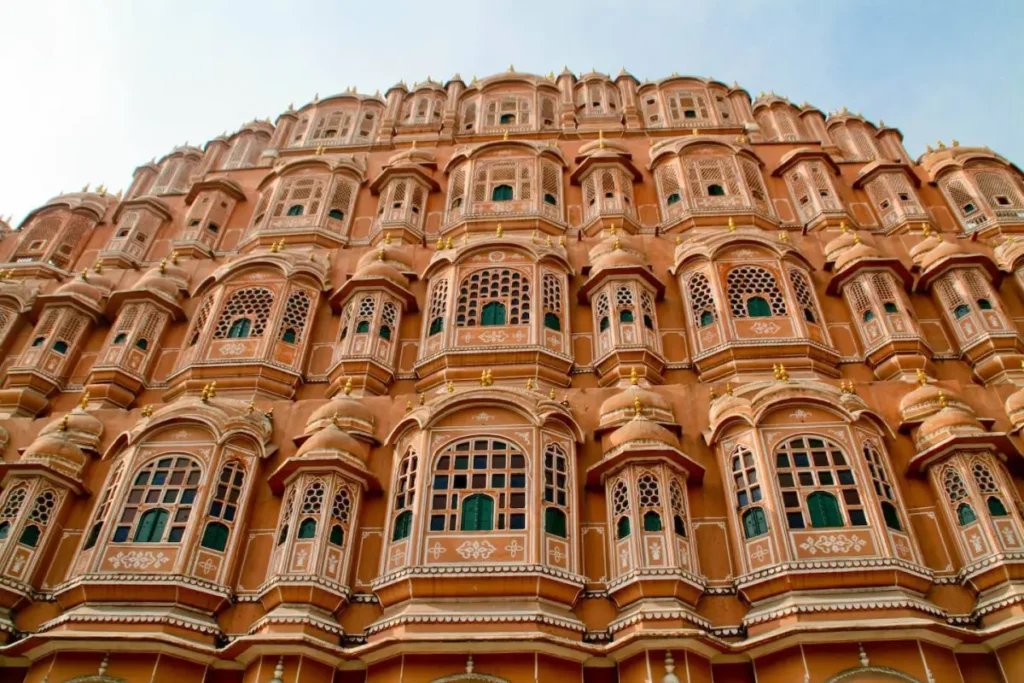
Jaipur’s much-loved Palace of Winds is a signature pink sandstone marvel worth discovering. It has a honeycomb-shaped five-storey front with 953 tiny windows (jharokhas) through which royal women viewed street life unnoticeably.
The detailed latticework, along with featuring privacy, also at the same time promotes air circulation, thus naturally regulating temperatures in blazing summers. Placed in central Jaipur, this is a stunning monument embodying Rajput artistry. Tourists will be able to enjoy the beautiful exterior, take memorable photo shoots, and also familiarize themselves with Jaipur’s aristocratic lineage. All in all, first-time tourists ought not to skip Hawa Mahal.
City Palace
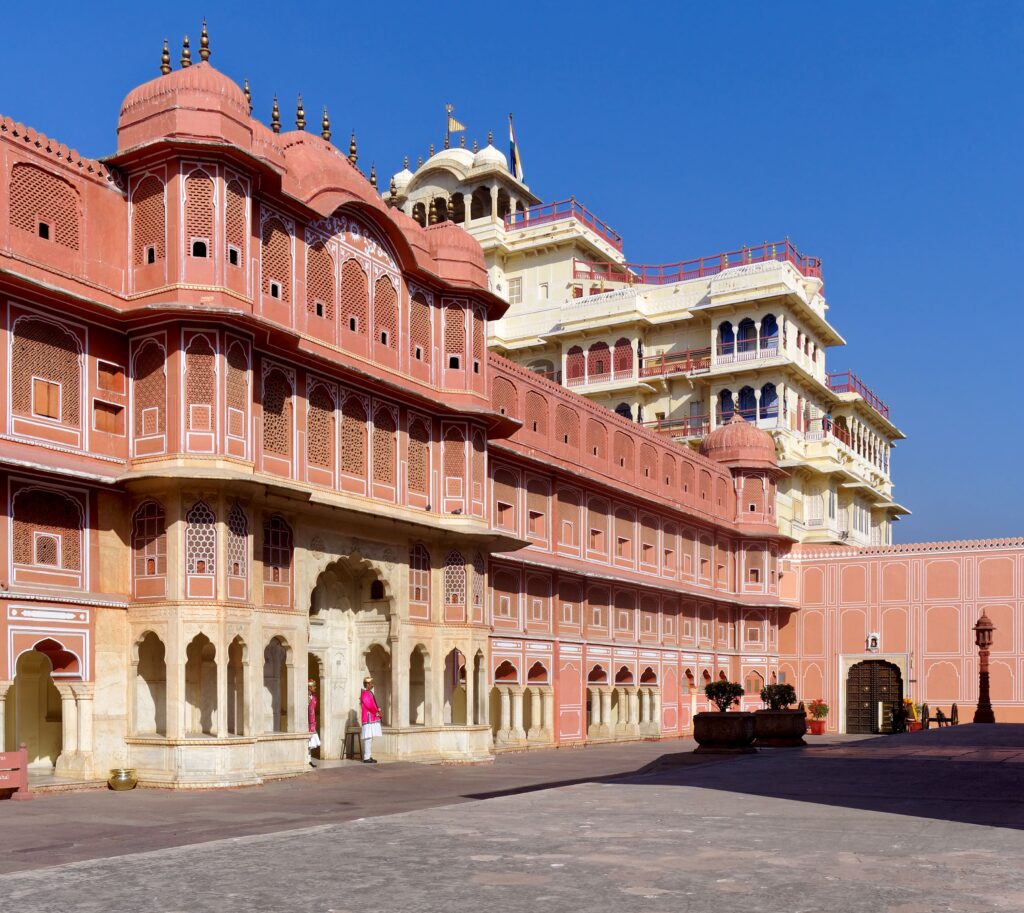
For new visitors to Jaipur, this is another go-to place, as the City Palace too aptly exemplifies design elements of the Rajput as well as the Mughal. Nestled in Jaipur’s old city, it is steeped in enduring majestic opulence.
The complex comprises Mubarak Mahal, multiple museums housing ceremonial costumes, artifacts, arms, and royal textiles, and also the Chandra Mahal. The City Palace’s grand gates, lovely gardens, and extensive courtyards set for visitors a princely atmosphere.
Though partially, this palace continues to remain a home to royalty, blending current-day life with echoes of history. Touring this specific heritage site will enable first-timers to associate with the Pink City’s artistry, stately lifestyle, and engineering genius, thereby making it stand out.
Amer Fort
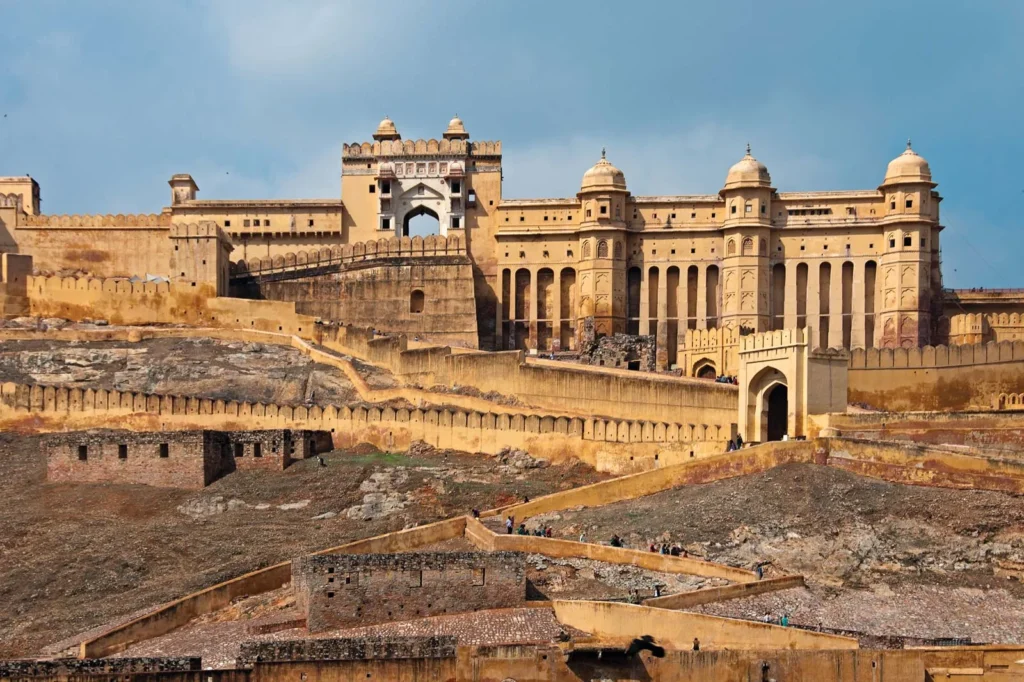
Located majestically on Amer’s hillside, the Amer Fort is a beautiful mix of Mughal and Rajput architectural structures, which takes the visitors to the world of regal splendor. Its ornamental gates, deeply carved palaces, and sprawling courtyards reveal generations of heritage. The Mirror Palace, or prevalently the Sheesh Mahal, gleams with countless mirrors casting light with ornate reflections. Tourists also have the privilege to experience light-and-sound shows, elephant rides, and jaw-dropping Maota Lake views.
New travelers with a suitable India visa will genuinely find this site an unmissable spot which appropriately celebrates the city’s stunning edifices and royal lineage.
Patrika Gate
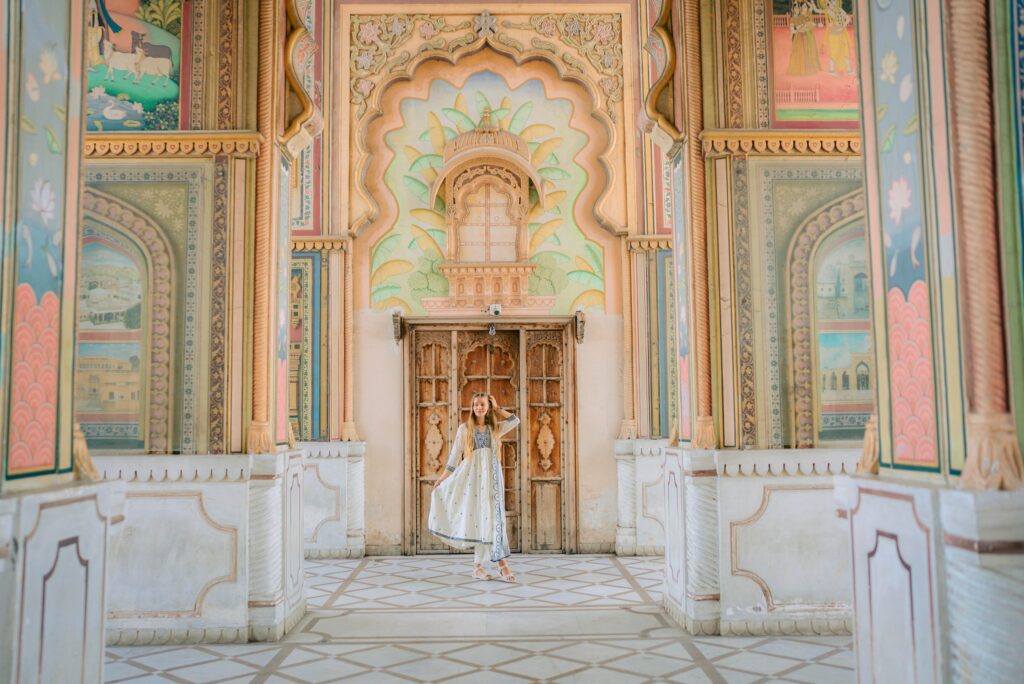
The Patrika Gate is a colorful and vibrant landmark where one can see colorful murals of the traditions and culture of Rajasthan. The arches are adorned with beautiful work, and each archway is the most photographed place in Jaipur. Tourists enjoy walking along its painted corridors, which are like an art gallery (living and breathing).
It is free to see and is open throughout the day, and therefore, people can check its beauty at any time. Patrika Gate gives newcomers a joyful introduction to this place’s artistic spirit, making it apt to document treasured photographs.
Jantar Mantar
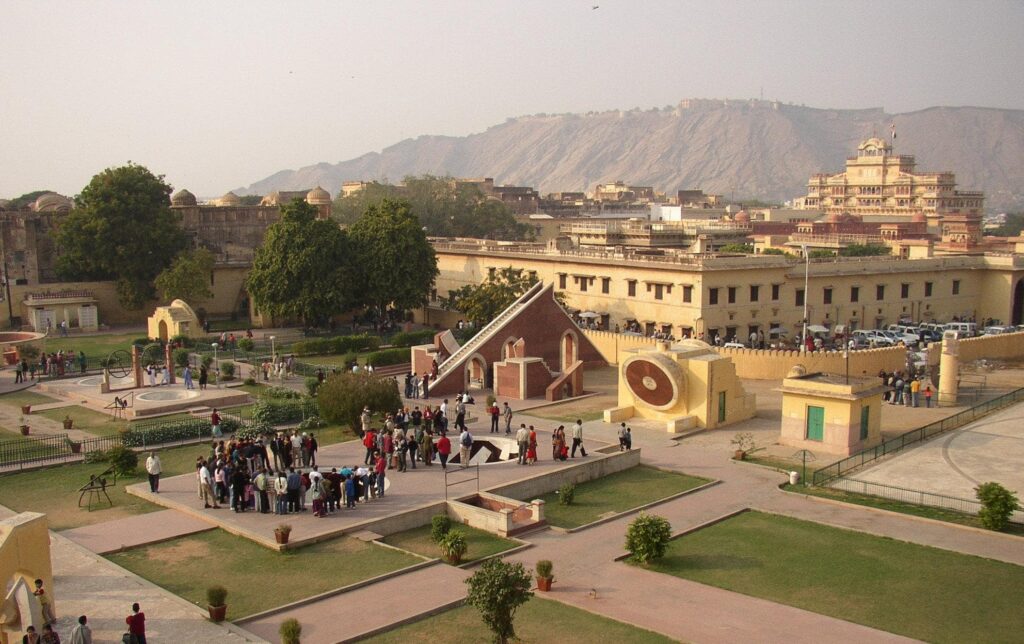
Jantar Mantar is an outdoor observatory that has enormous stone-based equipment, which is used to observe the motion of the moon, stars, and sun. It is enthralling and enlightening, with its distinctive constructions entailing an oversized sundial.
Visitors have an opportunity to stroll between the instruments and master how the same were incorporated to determine time and forecast celestial/heavenly events. The location is a combination of science and art, which provides an insight into Jaipur’s innovation as well as its heritage of knowledge.
Jantar Mantar is a site that ought to be visited because of its one-of-a-kind architectural blueprint and the cultural value it conveys to newcomers.
Nahargarh Fort
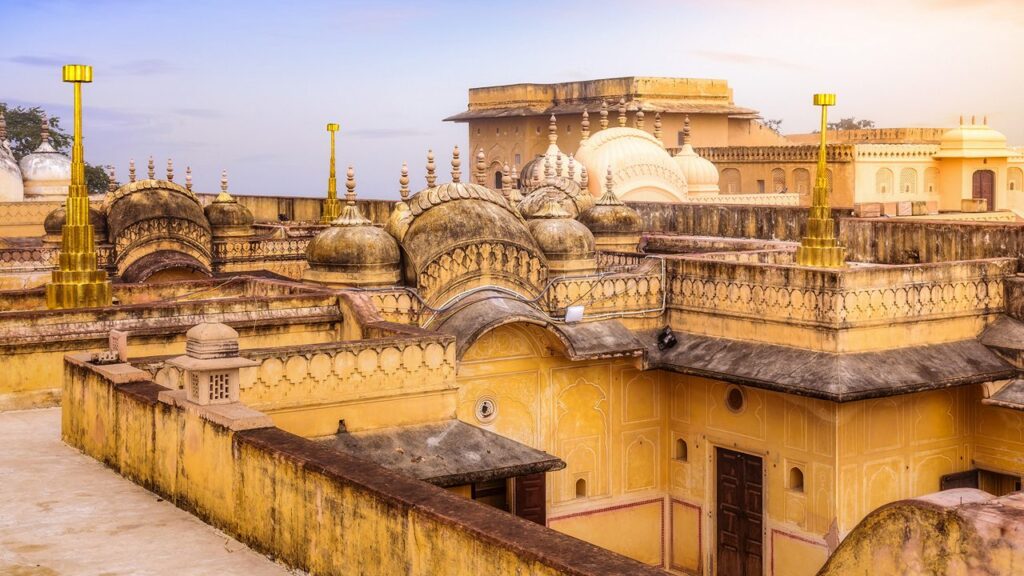
Positioned on the astounding Aravalli Hills, Nahargarh Fort presents the cityscape’s broader observations. Its courtyards and walls have a calming effect, and the interior consists of well-decorated rooms.
Nahargarh Fort is all the rage predominantly during sunset hours as the Pink City gleams in gold and blush. Guests like uncovering its terraces, pathways, and eye-catching viewpoints. Nahargarh Fort is a great place to spend some time at for first-timers in order to soak in Jaipur’s magnetism.
Jaigarh Fort
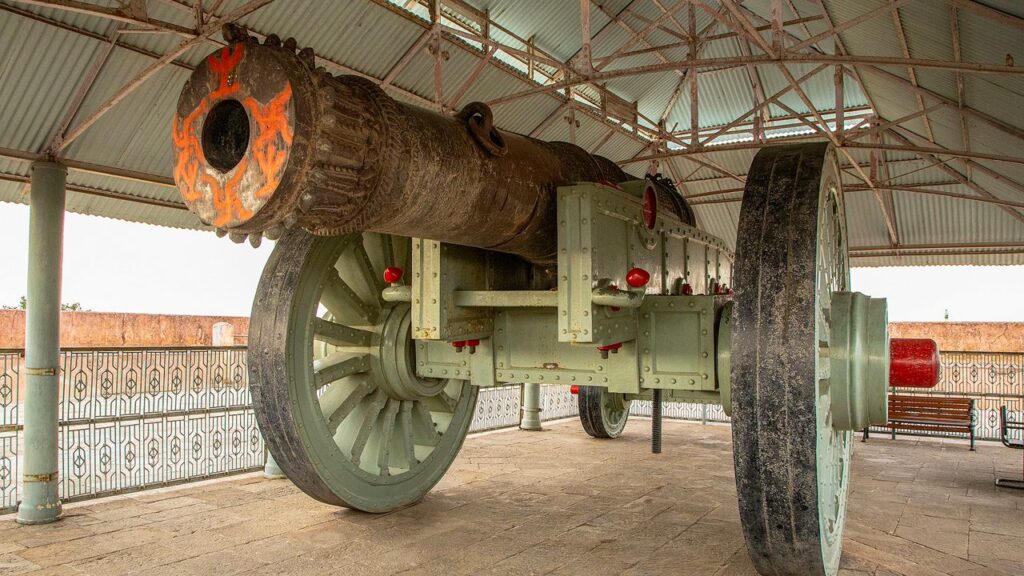
Jaigarh Fort takes immense pride in its watchtowers, well-built walls, and imposing construction. It was constructed as a fortification, and it still has an air of power and magnificence.
The visiting area has water pits, courtyards, and armories that are a product of the practicality of the design of the fort. It also provides drop-dead gorgeous scenery of the hills around, coupled with the Amber Fort beneath.
In short, the Jaigarh Fort concerning first-time voyagers, is a worthwhile stop over as it captures Jaipur’s unyielding character.
Jal Mahal
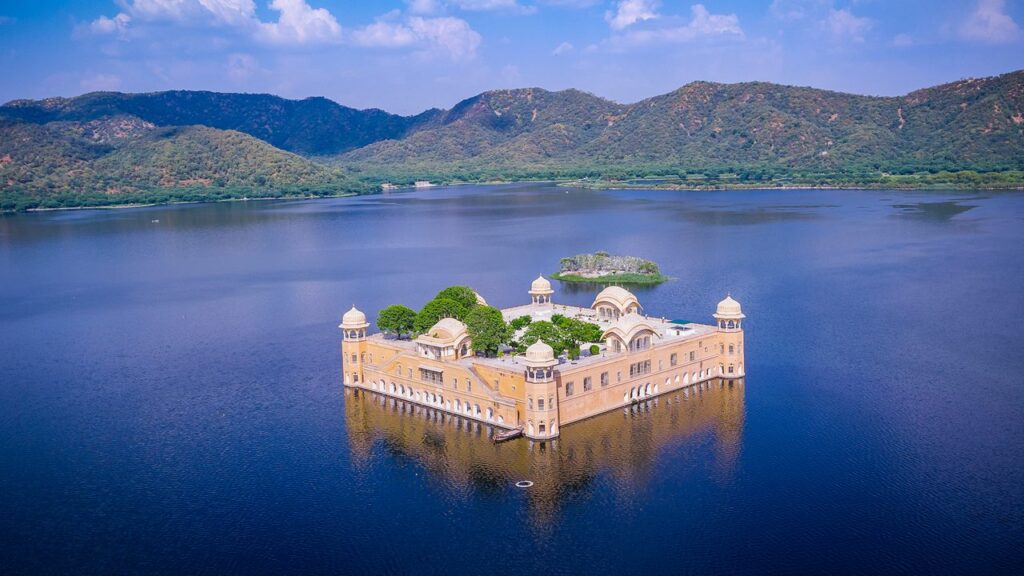
Jal Mahal, also dubbed Water Palace indeed is an impressive building, sophisticatedly floating atop Man Sagar Lake, replicating a weightless beauty.
It is so delicate and calm that it is considered one of the recurrently photographed hotspots in Jaipur. The lakeside sunrise/sundown visions are spellbinding, although tourists are barred to step inside the palace. The beauty of it is augmented by the serene waters and the presence of hills.
Jal Mahal for novel visitors is a good break to unwind and take in the post-card perfect cityscape.
Albert Hall Museum
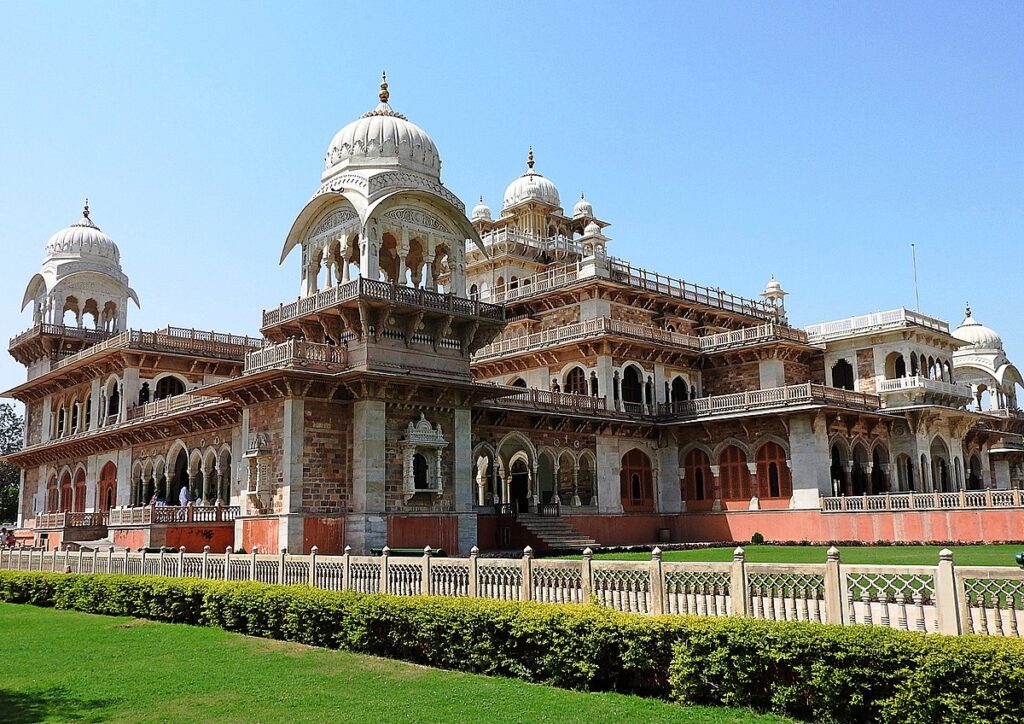
Albert Hall Museum, along with being a treasure hub brimming with Jaipur’s history and art, is also its earliest museum. The structure, to be more precise, Indo-Saracenic featuring arches to domes, is absolutely striking in its own right. Indoors, one can find local compilations of artifacts, paintings, textiles, as well as sculptures that radiate Rajasthan culture’s soul. Other rare objects, such as conventional crafts and coins, are also on exhibition at the museum.
Albert Hall is a wonderful sightseeing destination in Jaipur, where a novice can gain information about the history of the city, besides appreciating its miraculous architecture and various exhibitions.
Gaitore Ki Chhatriyan
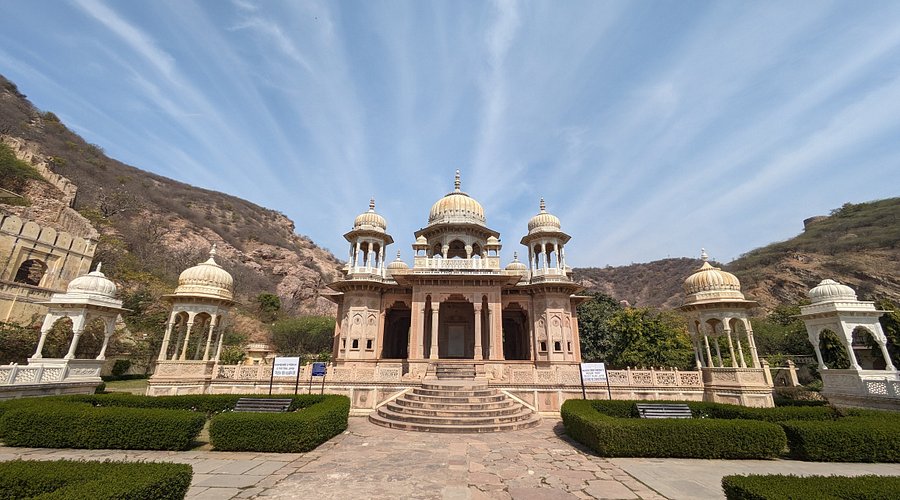
Gaitore Ki Chhatriyan is a still heritage spot highlighting delightfully made cenotaphs. Such designs comprise of sandstone together with marble, and they have elaborated designs that emphasize local craft. The setting is calm, and it is less congested and as such, it is suitable for those tourists who fancy a quiet milieu. Onlookers are able to go around the chhatris and appreciate their crafts as they take in the soothing environment.
For any curious newcomer, Gaitore also presents a good perspective on the cultural narration of Jaipur in a still environment.
Panna Meena ka Kund
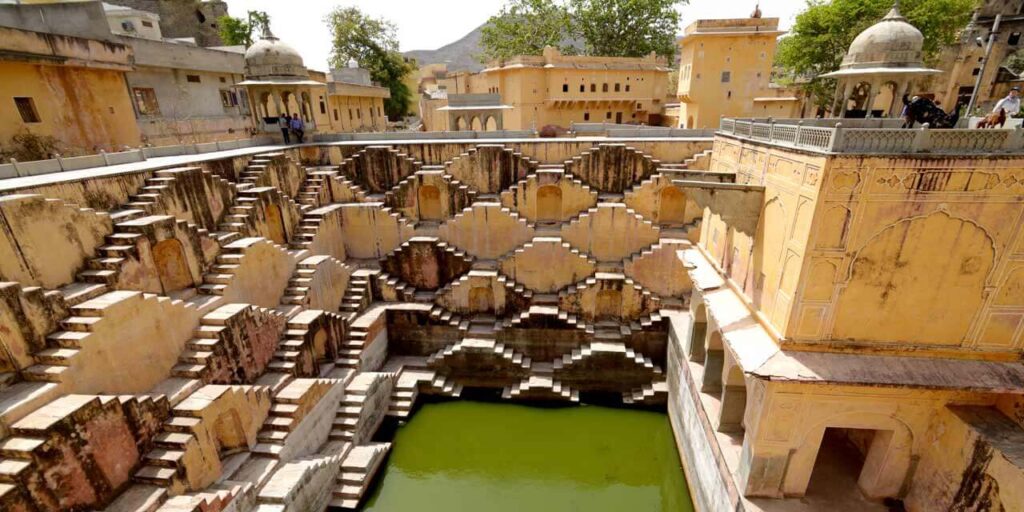
Panna Meena ka Kund is a yesteryear stepwell identified for its patterned layout and aligned staircases. It also used to be a source of water and socialization among the people. It is now viewed as a marvelous building with its subtle elegance and powerful design. The distinctive layout of the stepwell makes the visual experience mesmerizing and has become a trendy photography destination.
Overall, this heritage venue is an off-the-beat treasure that fresh adventurers will undeniably be in awe of as it exhibits the ingenious nature of Jaipur and is also an idyllic place to unfurl without the hustle/chaos of the city.
Travelling Tips
- Sightseeing in Jaipur will be apt, spanning the agreeable October month to March months.
- Rely on guided trips and taxis for citywide tours, and exploring by foot is preferred for markets or cultural districts.
- Opt for respectful, conservative clothing while surveying Pink City’s religious venues.
- Be mindful both of Jaipur’s cultural norms and precise camera rules.
- Pre-book tickets online for Hawa Mahal, Amer Fort, and other renowned attractions to keep away from queues.
- For auto-rickshaws, street food vendors, and small shops, keeping cash is always handy.
- Avoid contact with any delicate/fragile structure.
- Refrain from littering.
- Savor Rajasthani delicacies such as Ghewar, thick lassi, Daal Baati Churma, kachori, and others.
- Plan for essential sun defense/protection.
- Download vital maps (offline) for seamless navigation.
- Wear relaxed shoes and comforting apparels.
- Start early for unhurried visits.
- Consult Jaipur’s local guides for authentic experiences.
Conclusion
Jaipur, in essence, illustrates India’s princely/royal traditions in full glory. First-time explorers are faced with varied choices such as vibrant lanes, majestic forts, and more, enabling them to experience the grandeur, deep heritage, and excellent artistry that characterize the splendid Pink City.